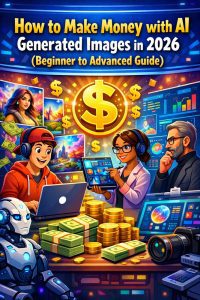
 AI generated images are no longer experimental.
It is a legitimate income stream.
What started as novelty art has evolved into:
High-converting ad creatives
YouTube thumbnails
Print-on-demand designs
Digital product packs
Branding assets
Freelance services
But here’s what most people get wrong:
They focus on generating images.
Instead of building monetization systems.
This guide will show you exactly how creators are turning AI generated images into scalable income in 2026 — whether you’re a beginner or building a creative business.
Step 1: Understand the Monetization Categories
AI generated images generate revenue in five primary ways:
Direct product sales
Marketing asset creation
Freelance services
Digital asset packaging
Content monetization
Let’s break each down strategically.
1️⃣ Print-on-Demand & Digital Art Sales
This is one of the most beginner-friendly monetization models.
You generate designs and sell them on:
Etsy
Redbubble
Shopify stores
Printful integrations
Creative Market
Popular formats include:
Posters
Canvas prints
Phone wallpapers
T-shirt graphics
Wall art collections
Digital downloads
Why It Works
Consumers don’t care how art is made.
They care about:
Emotional appeal
Aesthetic alignment
Niche relevance
AI dramatically increases production speed.
Instead of designing one concept per day, you can test dozens.
Niche Strategy Tip
The key is niche specificity.
Examples:
Minimalist botanical wall art
Cyberpunk car posters
Anime-style pet portraits
Motivational typography art
Luxury abstract gold textures
If you need help structuring powerful prompts for niche visuals, review our
Advanced AI Prompt Examples Guide →
Quality prompts directly impact perceived value.
2️⃣ YouTube Thumbnails (High ROI Opportunity)
YouTube is driven by CTR (click-through rate).
Thumbnails directly influence:
Views
Revenue
Growth velocity
Many creators struggle to design custom thumbnails.
AI generated images allow you to:
Create dramatic backgrounds
Generate stylized faces
Produce emotional scene compositions
Test multiple variations
Freelancers charge:
$20–$150 per thumbnail
With structured prompt systems, production time drops significantly.
This model is especially profitable if you:
Offer recurring services
Work with multiple channels
Specialize in high-CTR design styles
3️⃣ Advertising Creative Production
Digital marketers constantly test ad visuals.
On platforms like:
Facebook
Instagram
TikTok
YouTube Ads
Ad fatigue happens quickly.
Brands need fresh creatives constantly.
AI generated images allows rapid:
Concept variation
Background changes
Emotional tone adjustments
Lighting experimentation
Agencies that adopt AI workflows increase output while lowering cost.
If you’re learning how to optimize your production speed, see:
The Ultimate AI Content Creation Workflow →
Speed is competitive advantage.
4️⃣ Selling Prompt Packs (Underrated Income Stream)
Instead of selling images…
Sell the prompts.
Creators purchase:
Midjourney prompt packs
Niche art prompt libraries
YouTube thumbnail prompts
Fantasy world-building packs
Social media ad prompt sets
Example:
“50 Luxury Product Photography Prompts”
These are:
High margin
Scalable
Easy to distribute digitally
The difference between average and premium prompt packs?
Structure.
If your prompts are refined and structured, their perceived value increases dramatically.
5️⃣ Freelance & Agency Services
AI image skills can be packaged as:
Branding design services
Social media creative production
E-commerce mockups
NFT-style art commissions
Book cover designs
Course graphics
Many businesses don’t care about AI mechanics.
They care about:
Fast turnaround
Professional results
Consistent style
If you combine structured prompt generation with workflow efficiency, you increase output capacity.
That means more clients.
6️⃣ Content Monetization (Indirect Revenue)
AI generated images can also power:
Blog content
Pinterest accounts
Instagram theme pages
TikTok aesthetic channels
Digital courses
These monetize through:
Ads
Sponsorships
Affiliate marketing
Product sales
AI reduces visual production cost dramatically.
You can maintain consistent branding without hiring designers.
The Real Multiplier: Speed × Volume × Quality
Revenue scales with:
Output speed
Testing frequency
Niche targeting
Visual clarity
Creators who produce 5 designs per week compete differently than those producing 50.
But quality still matters.
Poorly structured prompts lead to:
Flat lighting
Inconsistent realism
Weak composition
Amateur-looking results
That’s why serious monetization requires structure.
If you’re new to prompt fundamentals, start here:
Beginner’s Guide to AI Prompt Engineering →
Understanding structure compounds earnings.
Common Mistakes Beginners Make
❌ Trying to sell generic art
❌ Ignoring niche research
❌ Overproducing without testing
❌ Using inconsistent style
❌ Not systemizing workflow
Successful creators treat AI like a production engine.
Not a toy.
How to Scale Beyond $1,000/Month
Once you validate a niche:
Batch produce variations
Create bundles
Expand into adjacent niches
Repurpose across platforms
Automate design pipelines
For example:
Create 30 cyberpunk car posters
Bundle into a “Collector’s Edition”
Repurpose into wallpapers
Offer limited NFT-style licensing
Structured prompt tools accelerate this process by reducing iteration time.
Legal & Ethical Considerations
Before monetizing:
Review platform AI policies
Avoid copyrighted character replication
Ensure commercial usage rights
Maintain originality
AI should enhance creativity — not copy existing IP.
Final Thoughts
AI image monetization is not about hype.
It’s about systems.
The creators making consistent income:
Choose profitable niches
Produce structured, high-quality prompts
Iterate quickly
Package strategically
Build workflows
If you want a full breakdown of how structured prompting increases production quality and speed, start with:
👉 Create Stunning Prompts and Images Faster Than Ever
That guide explains why prompt structure directly impacts monetization success.
Frequently Asked Questions
Can beginners really make money with AI images?
Yes. Beginners can monetize through print-on-demand, thumbnails, and digital prompt packs if they focus on niche targeting and structured prompts.
How much can you realistically earn?
Income varies widely. Some creators earn a few hundred dollars per month, while agencies and high-volume sellers scale into five figures.
Is it legal to sell AI-generated images?
Generally yes, but you must verify commercial rights of the platform you use and avoid copyrighted characters or trademarks.
Do I need design skills?
Basic visual understanding helps, but structured prompt systems reduce the need for advanced design experience.
What is the fastest way to start?
Begin with print-on-demand or selling niche prompt packs while building a repeatable workflow.